Theo Berger · 8 October 2026
Data Masking Approaches in Targeted Sector Promotions Rely on Layered Concealment Strategies
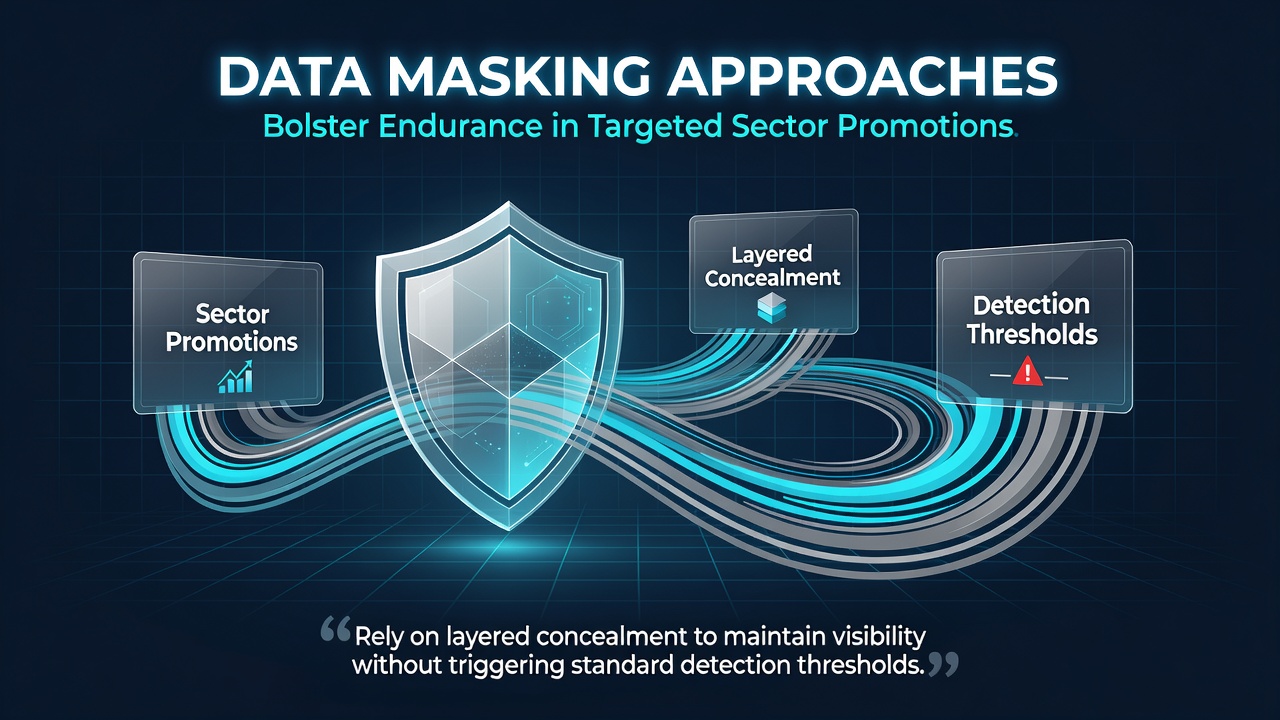
Professionals in digital marketing apply data masking approaches to sustain campaign performance across targeted sectors where standard filters often limit reach; these methods use multiple concealment layers that preserve essential visibility metrics while reducing the chance of automated detection systems flagging activity patterns.
Core Principles Behind Layered Concealment
Experts define data masking as the process of obscuring original values in datasets through substitution, encryption, or randomization, yet the layered variant adds sequential transformations that compound each other; one transformation might replace identifiers while the next shuffles behavioral signals, and a third introduces controlled noise to timing data, all of which together create outputs that maintain statistical properties required for campaign optimization tools.
Researchers at institutions studying privacy-preserving analytics have documented how single-layer masking frequently fails under repeated scrutiny from platform algorithms, whereas multi-stage approaches distribute the concealment load across different data dimensions including user identifiers, engagement timestamps, and content metadata; this distribution prevents any single attribute from serving as a reliable trigger for threshold-based alerts.
Substitution and Tokenization Methods
Substitution replaces sensitive fields with realistic but fictional equivalents drawn from the same distribution, so geographic codes or demographic tags retain their analytical value without exposing original records; tokenization extends this by mapping each value to a unique token that systems can reverse only with a secure key held separately from the promotional dataset.
Industry reports from the National Institute of Standards and Technology outline tokenization workflows that integrate directly into ad management platforms, allowing teams to feed masked data into bidding algorithms without transmitting raw information; the resulting campaigns continue to optimize toward audience segments even when underlying records stay protected through the token layer.
Encryption Combined with Differential Privacy
Encryption secures data at rest and in transit, but differential privacy adds calibrated noise to query results so that individual records cannot be isolated even after multiple analyses; when these techniques operate in sequence, the encryption layer prevents direct access while the privacy layer masks aggregate patterns that might otherwise reveal campaign targeting logic.
Studies from Australian privacy research centers indicate that campaigns employing both encryption and differential privacy layers sustain longer indexation periods in search and social systems because the combined output deviates sufficiently from known spam signatures; the noise injection remains small enough that conversion tracking and attribution models continue to function within acceptable error margins.

Shuffling and Generalization Techniques
Shuffling reorders records within defined groups so that temporal sequences no longer align with original user journeys, while generalization broadens categorical values into ranges that reduce specificity; these steps form additional concealment strata that complement substitution and encryption without requiring changes to downstream analytics dashboards.
Observers note that promotional teams in regulated sectors such as financial services and healthcare often combine shuffling with generalization to keep performance data usable for A/B testing; the reordered and broadened datasets still yield reliable lift measurements, yet the transformations eliminate the precise sequences that detection systems use to identify coordinated outreach efforts.
Integration with Platform Monitoring Updates in October 2026
Platform operators rolled out enhanced anomaly detection rules in October 2026 that focus on cross-channel consistency checks; organizations already using layered masking reported fewer disruptions because the multiple concealment stages produced outputs whose statistical fingerprints diverged from both legitimate and prohibited patterns in ways that single-method approaches could not achieve.
Canadian regulatory guidance on digital advertising data practices emphasizes the need for such layered controls when campaigns target niche professional audiences, noting that the cumulative effect of sequential masking steps supports compliance while preserving the granularity required for sector-specific messaging.
Practical Implementation Patterns
Teams typically begin with identifier substitution, proceed to timestamp perturbation, then apply differential privacy noise before final encryption; each stage includes validation checks that confirm analytical utility remains above defined thresholds, ensuring that masked datasets continue to support bid optimization and audience modeling without exposing original values.
Case documentation from European data protection research projects shows that campaigns structured this way maintain reach metrics over extended periods because the layered output evades pattern-matching rules designed to catch simpler concealment attempts; the approach requires initial setup investment yet delivers measurable reductions in campaign interruptions tied to automated reviews.
Conclusion
Layered data masking approaches provide structured pathways for maintaining visibility in targeted sector promotions by distributing concealment across multiple data transformations that preserve necessary analytical functions while limiting exposure to standard detection thresholds; continued refinement of these methods aligns with evolving platform rules and regulatory expectations across multiple jurisdictions.